
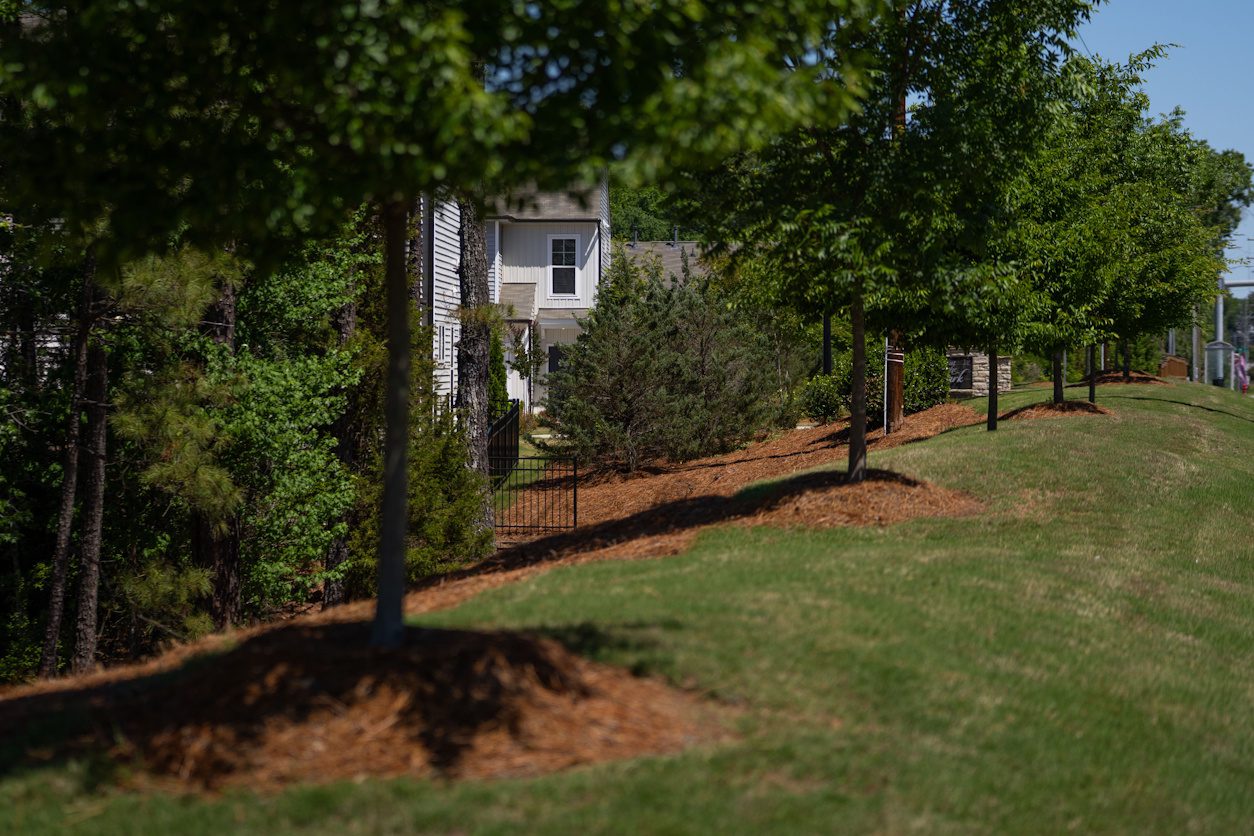
Balancing Compliance and Curb Appeal with Commercial Landscape Buffers
Commercial landscape buffers serve an important purpose. They can separate different land uses, screen parking areas and buildings, improve streetscapes, and create an attractive transition between a development and its surroundings. In growing communities throughout North and South Carolina, local development ordinances often establish requirements for buffers, screening, tree plantings, and other landscape elements.
For developers and property owners, the challenge is meeting those requirements without creating a landscape that feels purely regulatory. With thoughtful planning and professional installation, required buffers can become an attractive feature that improves the appearance, functionality, and long-term value of a commercial property.
What Are Commercial Landscape Buffers?
Landscape buffers are designated areas of landscaping that provide separation between a commercial property and adjacent properties, roadways, or other land uses. Depending on the project and local regulations, buffers may incorporate trees, shrubs, groundcover, fencing, walls, or other screening elements.
The exact requirements vary considerably between municipalities and individual projects. Local Unified Development Ordinances, zoning regulations, and development standards may specify buffer widths, plant quantities, tree sizes, screening requirements, and other details.
Because these requirements differ from one jurisdiction to another, developers should address commercial landscape buffers early in the planning process rather than treating them as an afterthought.
Buffers Can Enhance Curb Appeal
Required landscape buffers don’t have to be purely functional. When thoughtfully designed, they can become an important part of a property’s visual identity.
Well-designed buffers can:
- Improve curb appeal along roadways
- Screen parking and service areas
- Create separation from neighboring properties
- Provide shade and greenery
- Improve the pedestrian experience
- Add visual interest to large commercial sites
- Complement entrance monuments and signage
- Create a more established appearance
Strategic plant selection and placement can transform what might otherwise be an ordinary strip of required landscaping into an attractive, cohesive part of the property.
Designing Around Local Requirements
One of the biggest challenges with commercial landscape buffers is incorporating regulatory requirements into the overall site design. Buffer areas may need to coexist with sidewalks, utilities, drainage systems, parking areas, signage, access points, and other site features.
Pipeline Landscape works with developers and project teams to install landscape plans according to project specifications and applicable local requirements. Our experience with commercial developments throughout the Carolinas helps us anticipate practical installation challenges and coordinate landscaping with the other components of a construction project.
Plant selection is another important consideration. Native and regionally appropriate plants can often provide excellent performance in Carolina landscapes, particularly when they are matched to the property’s soil, drainage, sunlight, and maintenance conditions.
Roadside Buffers and First Impressions
Commercial landscape buffers along public roads are particularly important because they are often one of the first things people see when approaching a commercial property.
A well-planned roadside landscape can frame an entrance, complement monument signage, provide a consistent streetscape, and help a development feel established. Trees and layered plantings can also soften large parking areas and buildings from view.
Pipeline can install trees, shrubs, groundcover, mulch, signage landscaping, and other landscape elements to create a polished roadside appearance while following the project’s approved plans and local requirements.
Buffers, Trees, and Natural Areas
Landscape buffers can also provide an opportunity to preserve existing vegetation and incorporate mature trees into the overall site design. In some cases, maintaining existing vegetation can help create an established appearance while reducing the amount of new plant material required.
Commercial developments may also have separate requirements related to tree conservation, stream buffers, stormwater facilities, or other environmentally sensitive areas. These requirements can make landscape planning more complex and reinforce the importance of coordinating landscaping with the broader site development plan.
Professional Installation Matters
Meeting buffer requirements on a landscape plan is only part of the process. The finished landscape needs to be installed correctly so that plants establish successfully and the property continues to meet its intended appearance and function.
Proper installation includes considerations such as:
- Plant spacing and placement
- Soil preparation
- Grading and drainage
- Mulching
- Irrigation
- Tree staking and establishment
- Erosion control
- Coordination with sidewalks, utilities, and other site improvements
Experienced commercial landscaping contractors understand that these details can have a significant impact on the long-term performance of a project.
Pipeline Landscape’s Experience with Commercial Landscape Buffers
Pipeline Landscape has extensive experience installing commercial landscapes throughout North and South Carolina. Our team works with developers, builders, municipalities, property owners, and project managers on a wide range of landscape improvements, including perimeter buffers, streetscapes, entrance landscaping, tree installations, commercial hardscaping, and long-term maintenance.
We understand the importance of completing commercial projects according to approved plans, coordinating with other contractors, maintaining a clean jobsite, and delivering quality work on schedule. Our full-service capabilities also allow us to support projects beyond the initial landscape installation.
Creating Buffers That Add Value
Commercial landscape buffers should satisfy applicable requirements, but they can also contribute significantly to the property’s appearance and usability. With the right plant materials, thoughtful installation, and ongoing maintenance, a required buffer can become an attractive feature that adds value to the entire development.
Pipeline Landscape provides full-service commercial landscaping throughout North and South Carolina. Whether you’re developing a new property that requires extensive buffers and streetscape landscaping or need improvements to an existing commercial site, our team has the experience and capabilities to deliver a landscape that looks professional, performs well, and meets the demands of your project. Schedule a discovery call with Pipeline today.


